Fuel: Regulate
Welcome to Fuel blog three out of four. If you enjoyed your recent Fuel session in school, this page is packed with even more info. You may have arrived at this blog after scanning the QR code on your Fuel: Regulate postcard. Regulate is all about being aware of our emotions and managing them well.
First, a reminder that our emotions are normal, helpful, and important.
Normal
Emotions are a fundamental part of being human. We all experience joy, pain, sadness, tiredness, anxiety, excitement, and countless other feelings. Unfortunately, we often forget this and may even feel like we are alone when we feel some of those more difficult emotions. Sometimes we allow them to define us or make us feel like we have done something wrong. Recognising that emotions are normal reminds us that others can relate to and support us when we're going through a tough time. Moreover, seeing emotions as normal is a healthy perspective. It's helpful for managing and acknowledging emotions rather than being overcome by them.
Helpful
Our emotions evolved as our body's way of reminding us to celebrate, encouraging us to connect and, most importantly, warning us to be aware of danger. You may have heard of the Fight, Flight, Freeze (FFF) response before. Our emotions are powerful enough to help us respond even when there's not enough time to think. This is a video on the basics of the FFF response.
Today, though we may not face the same threats as hunter-gatherers, the same system is still in place. Ever felt nervous before a test? This is your emotions' way of saying "REVISE!" Anxious before a big game? Your body's shouting "TRAIN AND REST!" Guilty after cancelling on a friend? Your nervous system is screaming "I VALUE THAT PERSON!" When you become aware of an emotion, ask, "What is my body trying to tell me?"
Important
I'm sure we'd all agree that our emotions have a big impact on our lives and our sense of wellbeing. Therefore, quite simply, it's important to manage them well.
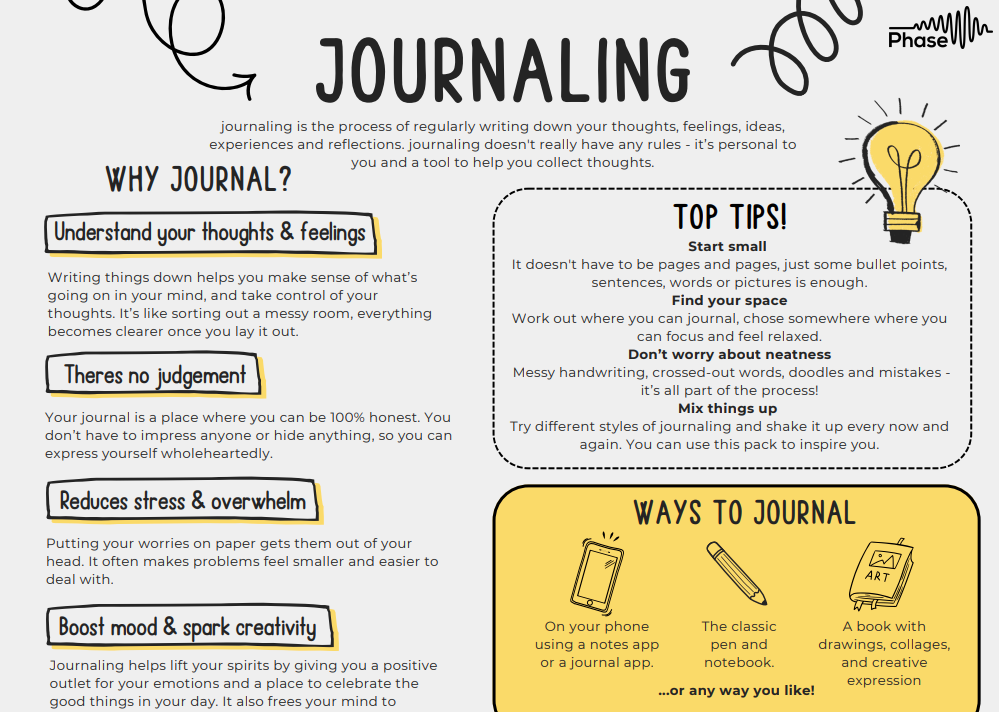
As many of the players in the video above mention, speaking to people we trust is a crucial skill for managing difficult emotions. Opening up requires wisdom and courage. Sometimes, though, we need to understand ourselves before we feel comfortable speaking to someone else. Journaling can be incredibly useful. Often, our thoughts go around in circles in our heads. By journaling, we can take our thoughts on a journey instead.
Try out this Phase journaling resource. You can download it by clicking on the image.
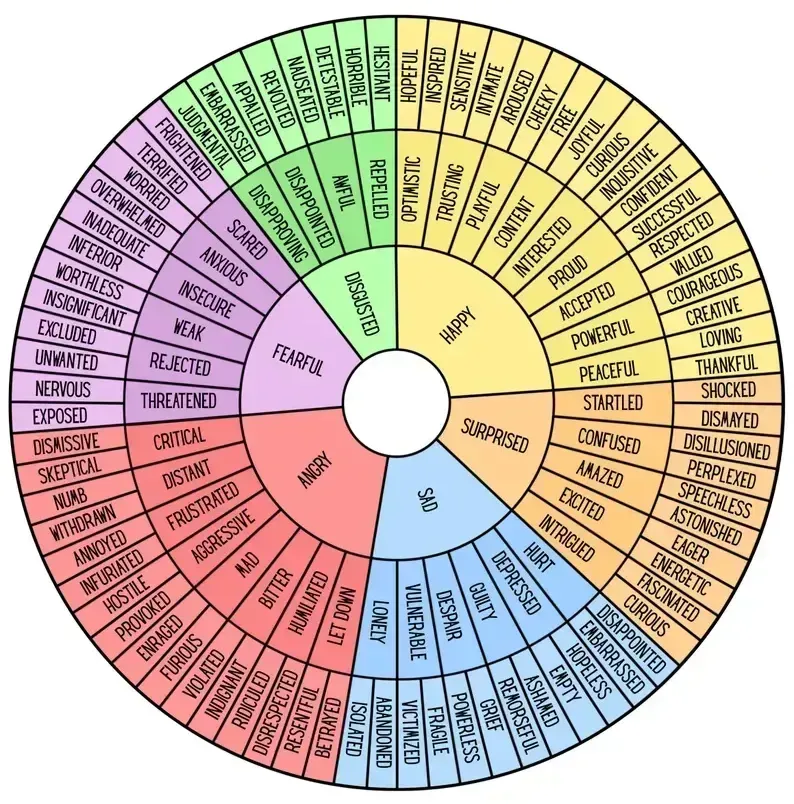
Emotional literacy is our ability to perceive, recognise, and label what we're feeling. Essentially, it is the ability to put words to feelings. Emotional literacy helps us to better understand ourselves and explain what we're going through to others. This understanding makes managing our emotions possible. Emotional intelligence is our ability not just to perceive our emotions but to understand, manage, and even use them as well.
The feelings wheel below is a super simple tool to help you build your emotional vocabulary...
Once we become adept at recognising and managing our own emotions, we are more able to empathise with what others are feeling too. Empathy is perhaps at the pinnacle of emotional intelligence. It is about feeling with people as opposed to sympathy, which is more about feeling for people.
Empathy is the ability to understand and share the feelings of another. It is explained beautifully by Brené Brown in this video:
Never miss a Phase blog post - subscribe here