An Urge to Help Others: The Psychology, History, and Heart Behind Why We Serve
What drives someone to offer their time and care without asking for anything in return? In our latest blog, we dive into the fascinating psychology and history behind volunteering—and share how local young people are putting empathy into action across Hitchin schools this term.
Recently, I found myself immersed in a routine administrative task: reviewing our staff and volunteer records to ensure DBS checks and safeguarding certifications were up to date. As I clicked through profile after profile, a single thought took root and simply wouldn't leave me: Why do people choose to volunteer?
What drives someone to offer their time, energy, and care to others without asking for a wage in return? Is there an innate human urge to help? And what are the psychological, social, and historical threads woven behind true altruism?
The Psychology of Giving: Why We Care
1. The Empathy-Altruism Hypothesis
Psychologist C. Daniel Batson proposed the Empathy-Altruism Hypothesis (1991), which suggests that empathy naturally triggers a genuine desire to improve another person’s wellbeing without expecting anything in return.
Batson explored whether humans ever truly care for others for their own sake, rather than for self-serving motives. He noted that when we perceive someone in need, it evokes an “other-oriented” emotional response—variously called compassion, tenderness, pity, or sympathy. Crucially, empathy involves feeling for the other person, rather than merely feeling as they feel.
Have you ever been described as an empathetic person? At Phase, we strive to wholeheartedly embody this value. We are driven by a common purpose: enhancing the emotional wellbeing and resilience of children and young people. However, if we do hold one expectation, it is a simple one—we expect to see young people thrive.
2. Self-Determination Theory
Why do people take the step from feeling empathy to taking action? Self-Determination Theory (Deci & Ryan, 2000) explains that human wellbeing relies on satisfying three core psychological needs:
- Autonomy: The freedom to choose to act.
- Competence: The joy of learning new skills and growing.
- Relatedness: Feeling deeply connected to a community.
In my day-to-day work, I oversee volunteer applications through platforms like GoVolHerts. I watch as individuals create profiles and reach out to charities, actively choosing to act. Many applicants don’t feel they possess every single skill required yet, but they arrive with a wonderful eagerness to learn. The single most common sentence across almost every application form reads: “I’d like to help people and support my local community.”
Dear reader—yes, you! I would wager that you volunteer in your own way, even if it doesn't carry an “official” title. Whether you help out at your local church, check in on a neighbour, sort donations at a charity shop, or support a local initiative, that urge to serve is likely already part of your life.
3. Helpers & Mental Health
Volunteering isn't just good for the recipient—it is biologically good for the giver. Research into the neurological benefits of altruism (Post, 2005) demonstrates that acts of giving release dopamine and oxytocin, reducing stress levels and boosting mental health.
This scientific reality is something I witness firsthand. It explains why our retired volunteers—who give so generously of their time—always seem to radiate such joy, warmth, and positivity whenever they visit our office. (Perhaps that is a research topic for a future blog post!)
Where Did Formal Charity Begin?
Organised giving spans millennia, rooted deeply in global religious traditions. In the New Testament, we find a timeless principle of heartfelt generosity:
“Each of you should give what you have decided in your heart to give, not reluctantly or under compulsion, for God loves a cheerful giver.”
— 2 Corinthians 9:7 (NIV)
The UK’s Charity Foundations
Formal, legally structured charity in Britain has a rich history:
- The Statute of Charitable Uses (1601): Passed during the reign of Queen Elizabeth I alongside the Elizabethan Poor Law, this landmark legislation created the legal definition of "charity" in England. It established commissions to protect donated funds from misuse and defined charitable purposes—such as relieving poverty, caring for orphans, funding education, and maintaining public works. It laid the legal blueprint for modern British charity law.
- The Foundling Hospital (1739): Created by sea captain Thomas Coram, who was heartbroken by the sight of abandoned children dying on London's streets, this became Britain's first incorporated public charity. Supported by artist William Hogarth and composer George Frideric Handel, it pioneered institutional child welfare and demonstrated how the arts and public goodwill could unite to protect vulnerable young lives.
Phase Spotlight: Full-Circle Kindness in Hitchin
At Phase, we see this impulse to help come alive in a truly inspiring way through our GROW Programme.
GROW works alongside Year 5 pupils—the youngest group we serve—over three one-hour workshops across the academic year. For many pupils, this is their very first introduction to Phase. While resilience is a broad topic, we focus on three practical pillars:
- Emotional Health: Learning to respond to our feelings in a healthy way.
- Adaptability: Understanding that flexibility helps us navigate change.
- Bouncing Back: Learning how to recover when things don't go to plan or when we face disappointment.
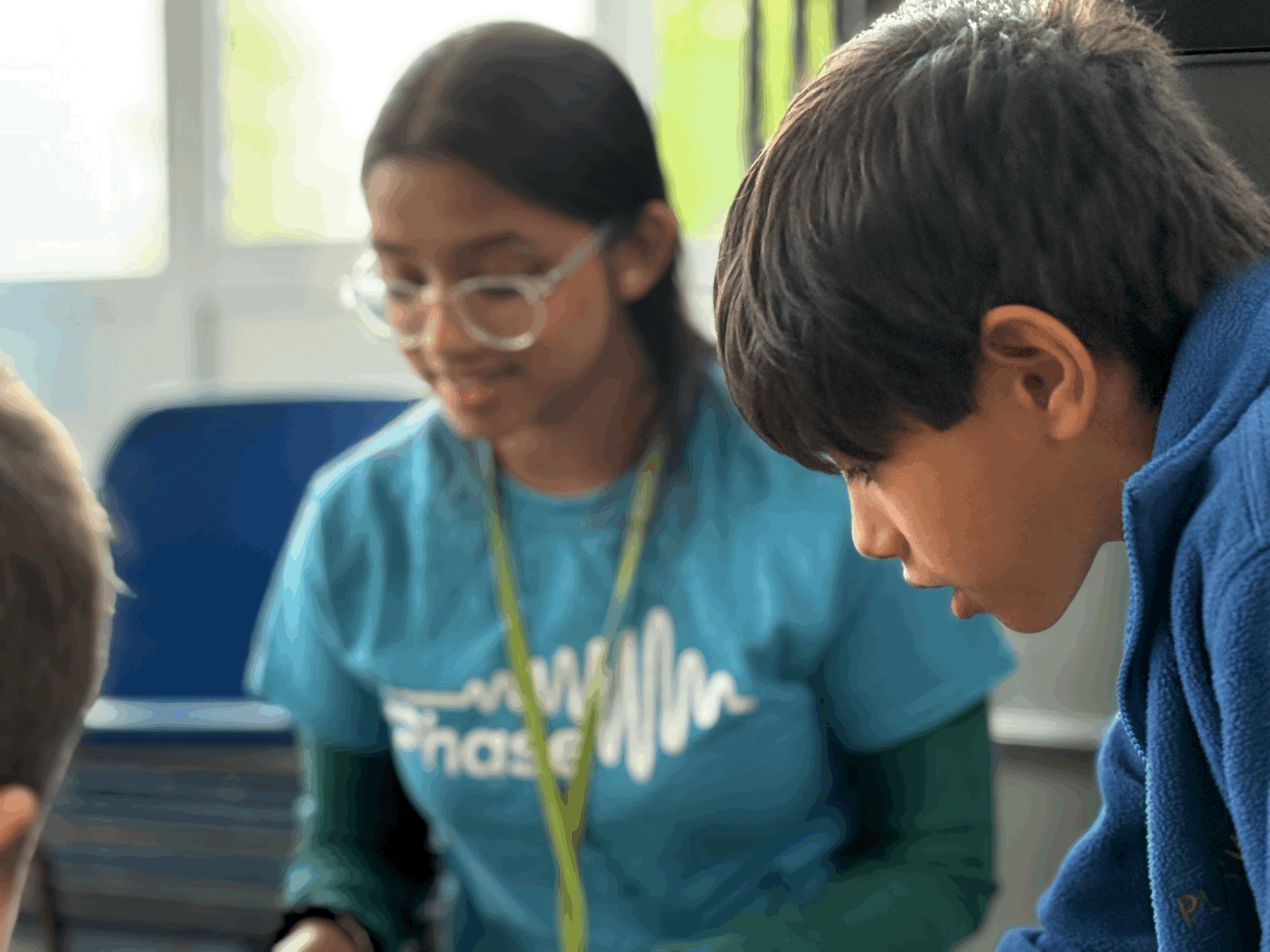
While Phase staff lead these workshops, Year 12 students play a vital role as mentors, receiving training to guide the younger children through activities.
It is a beautiful, full-circle moment. These Year 12 volunteers often first met Phase when they were primary or secondary pupils themselves. Now, as young adults, they step up to give back—developing public speaking, leadership, and behaviour management skills that will serve them for a lifetime.
And the response this year has been extraordinary. To deliver the GROW workshops, we required 48 Year 12 volunteers. We received an incredible 96 applications! Seeing so many local teenagers eager to support younger pupils fills us with immense hope.
Join Our Volunteer Family
While our Year 12 GROW team is brimming with energetic young leaders, Phase is always in need of adult volunteers to support our Year 6 primary workshops—including our upcoming Year 6 Christmas Unwrapped sessions—as well as our wider school initiatives.
If reading about the psychology of giving has sparked that innate urge to help, why not put it into practice? Whether you can spare an hour a week or a few days a term, we would love to welcome you into the Phase family.
References:
- Batson, C. D. (1991). The Altruism Question: Toward a Social-Psychological Answer. Lawrence Erlbaum Associates.
- Deci, E. L., & Ryan, R. M. (2000). The "What" and "Why" of Goal Pursuits: Human Needs and the Self-Determination of Behavior. Psychological Inquiry, 11(4), 227-268.
- Post, S. G. (2005). Altruism, happiness, and health: It’s good to be good. International Journal of Behavioral Medicine, 12(2), 66-77.
- The Foundling Museum Archives. Thomas Coram and the Foundling Hospital (1739). London.
Never miss a Phase blog post - subscribe here